
The care community is small. The same families show up at the same accessible pools, the same clinics, the same parasport clubs. After a while you stop being surprised when someone already knows someone you know.
Assistants move through the same spaces. One ends up working for two, three families — not because an agency placed her with all of them, but because that’s how it happens in a small world. Someone mentions her. A family already knows her from somewhere. She’s already trusted.
I’ve been building an app to manage care arrangements. Most of what I built first was for the guardian — the person running the arrangement. Schedules, time reports, the monthly FK forms. That’s where the paperwork lives, so that’s where I started. The assistant had a basic interface. She could see her shifts, clock in, submit her reports.
Covered, technically.
What I hadn’t thought through was what her situation actually looks like. Some assistants do this full time. Others fit it around something else — a job, a degree, a life that already exists. Some stay because the money is useful. Some stay because over time they’ve formed a real connection with the person they’re caring for. Often both. And many of them work for more than one family.
That’s when my PM brain kicked in.
There’s a term for this: product-led growth. It usually gets applied to tools like Slack or Notion — products that spread because the people using them bring them somewhere new. Someone joins a company, already loves the tool, suggests it to their team. No sales pitch. The product does the work.
The standard version assumes the person spreading it is also the buyer. Here it’s different. The assistant doesn’t pay for the app — the guardian does. But the assistant moves between families. She’s the shared element. If she already knows how to use it, already trusts it — the next family’s activation cost drops to almost nothing.
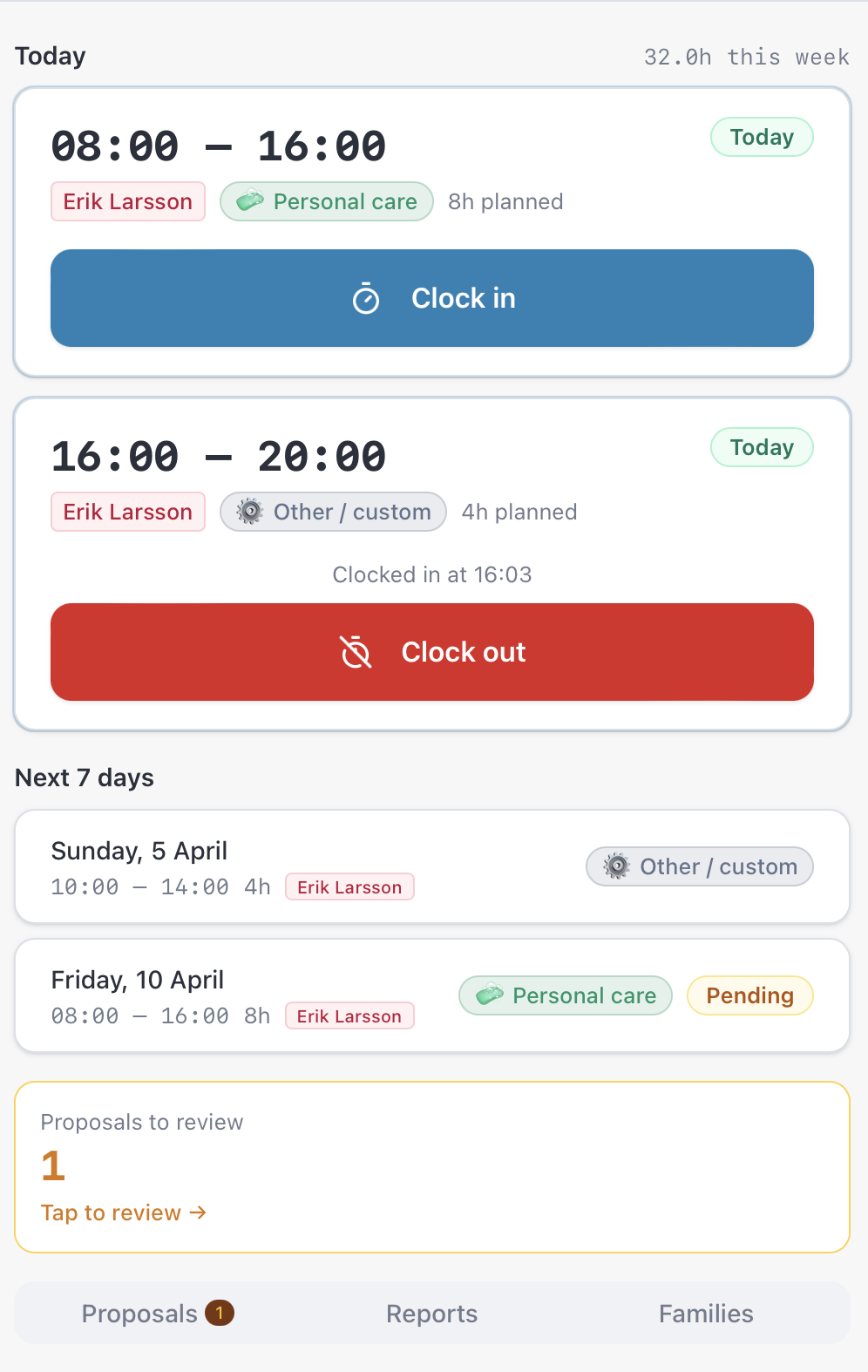
So we built for it. An assistant can now link her account to multiple families. Each family’s shifts appear tagged so she can tell them apart. Reports go to the right guardian. A guardian can send a link request to an assistant already in the system. She joins without creating a new account, without setup friction.
The growth mechanism was already there. Built into how the community works — into the fact that it’s small, that people know each other, that an assistant moves through it.